Gen Z Gamers: Statistics, Trends and What Brands Need to Know
Gen Z gamers are not just another audience segment inside gaming – they are shaping how the entire ecosystem evolves. Born between 1997 and 2012, this generation grew up with smartphones, social media, and on-demand content. Their expectations toward interactivity, personalization, and social connectivity directly influence platform design, monetization models, and brand integrations.
Understanding Gen Z gaming statistics in 2026 is critical for brands that want to remain culturally relevant and commercially effective inside gaming environments.
How Many Gen Z Gamers Are There?
Gaming is deeply embedded in Gen Z’s daily life. According to recent 2026 platform data, 87% of Gen Z (ages 13–24) play games regularly, and digital gaming engagement in the US is projected to reach 73–75% penetration by 2027.
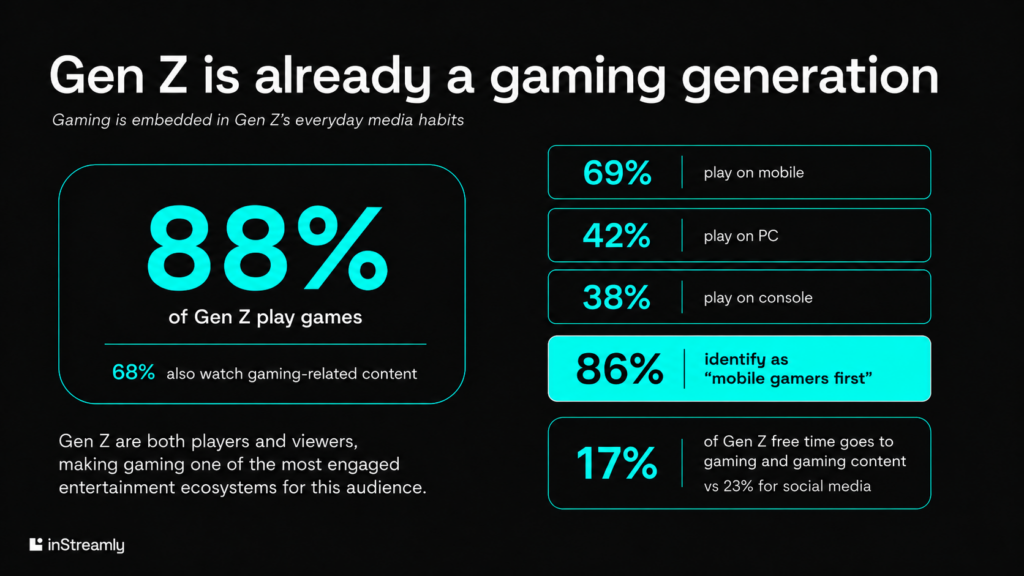
Newzoo data referenced by Udonis shows that 88% of Gen Z play games, while 68% also watch gaming-related content. This dual role – player and viewer – makes Gen Z one of the most engaged entertainment audiences globally.
Gaming is not secondary leisure for this generation. Udonis reports that Gen Z spends 17% of their free time on gaming and gaming content, compared to 23% on social media. For Gen Alpha, games already take the number one spot – reinforcing the direction Gen Z is heading.
Where Gen Z Plays: Platform Preferences
Mobile is the entry point, but not the entire story. According to 2026 platform statistics:
- 69% of Gen Z game on mobile
- 42% play on PC
- 38% play on console
- 86% identify as “mobile gamers first”
Mobile dominates in accessibility and frequency, but cross-platform behavior defines the generation. 58% use consoles and 54% use PCs in cross-platform play scenarios. Nearly half of all gamers now play on more than one platform, and cross-platform users return 31% more often than single-platform players.
Gen Z chooses games first and devices second. Titles that work seamlessly across mobile, PC, and console align best with their expectations.
Time Spent and Engagement Intensity
Gen Z engagement is high compared to the overall population.
Udonis reports that the average Gen Z gamer plays 6 hours and 10 minutes per day, compared to a 5-hour average across the total online population. Other data points show weekly gaming time for Millennials and Gen Z averaging 10.3 hours, up from 8.2 hours previously.
Gaming is not only about playtime. It also includes:
- Viewing streams and esports
- Participating in online communities
- Following creators
- Engaging with gaming-related content
90% of Gen Z classify as “game enthusiasts,” meaning they engage beyond just playing.
For brands, this means extended exposure windows across multiple touchpoints – gameplay, streaming platforms, social spaces, and community hubs.
Social Is the Core of Gen Z Gaming
Gen Z approaches gaming as a social infrastructure.
Key social indicators include:
- 58% consider gaming their main social space
- 67% of multiplayer gamers use voice chat regularly
- 45% have made at least one real-life friend through gaming
- 70% report meeting new people through games
Unlike previous generations, gaming competes directly with messaging apps and social networks as a primary connection tool. Multiplayer features, cooperative modes, and creative spaces play a central role in retention.
Platforms that prioritize communication tools, shared objectives, and creative self-expression outperform isolated single-player ecosystems among Gen Z.
User-Generated Content and Identity
User-generated content (UGC) is particularly influential for this cohort.
Platforms like Roblox reached 85.3 million daily active users at the end of 2024, with teen usage rising significantly year-over-year. Gen Z gravitates toward platforms where they can create, customize, and express identity.
84% of Gen Z users who customize avatars report drawing fashion inspiration from their digital looks. This blurs the boundary between gaming, commerce, and lifestyle.
For brands, this signals that integrations should enable participation and personalization rather than static exposure.
Gen Z Gaming Spending Patterns
Spending behavior among Gen Z is shaped by both enthusiasm and economic caution. Key statistics:
- 52% of Gen Z gamers make in-game purchases
- In-game purchases account for 76% of global online gaming revenue
- The average gamer spends $147 annually on microtransactions, up from $132 the previous year
- 93% of Gen Alpha and 91% of Gen Z have spent on in-game purchases in the past six months
Unlocking exclusive content and personalization rank as the top motivations for spending. Cosmetic items account for 41% of microtransactions globally.
At the same time, 2025 data indicates a drop in overall Gen Z spending year-over-year, with some shifting toward free-to-play or lower-cost social titles. Value and flexibility influence purchase decisions.
This creates a nuanced monetization landscape: high engagement, strong appetite for personalization, but heightened sensitivity to price.
Esports and Viewing Culture
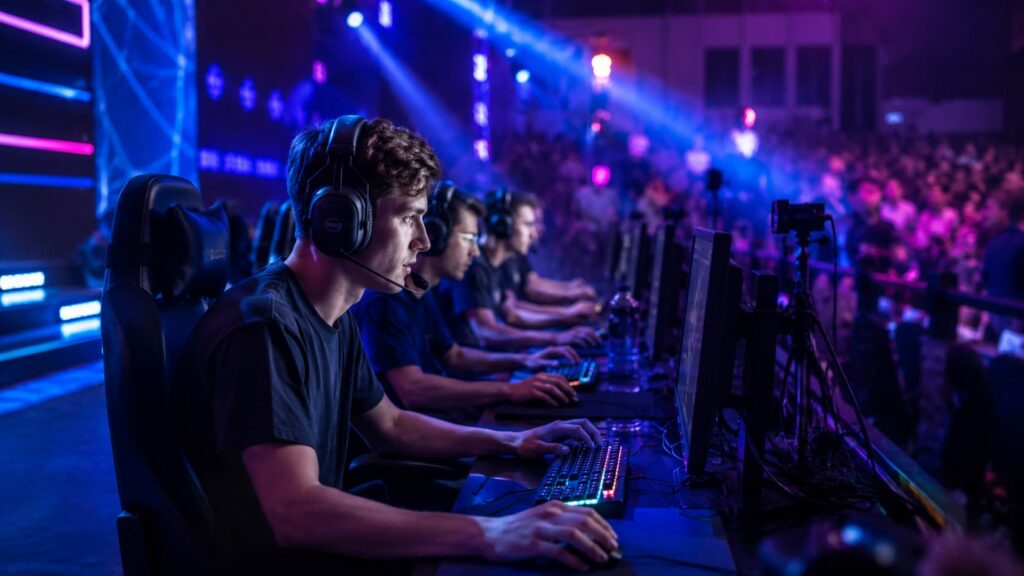
Gen Z dominates esports audiences.
- They represent 43% of the global esports audience in 2025
- Global esports viewership is projected to exceed 640 million
- 56% of live tournament streams are viewed on mobile devices
Gen Z does not separate playing from watching. Viewing high-skill gameplay, discovering strategies, and engaging with fan communities are integrated into their entertainment behavior.
For brands, this means that gaming strategy should extend beyond gameplay placements into content ecosystems – streaming, tournaments, and creator collaborations.
What This Means for Brands
Gen Z gaming trends point toward several strategic imperatives:
- Mobile-first, but not mobile-only
Cross-platform presence is essential. - Social-native activations
Campaigns should enable interaction, not just exposure. - Personalization-driven value
Cosmetics, digital goods, and identity expression resonate. - Creator and community leverage
Trust and discovery often come through peer networks. - Value sensitivity
Free-to-play and affordable access models matter.
Gen Z does not treat gaming as isolated entertainment. It intersects with fashion, music, esports, AI-powered commerce, and digital identity. Gaming is a cultural layer through which this generation expresses itself.
Brands that understand Gen Z gamers as socially driven, platform-fluid, and personalization-oriented will be better positioned to design strategies aligned with how this generation actually engages with games.