


Gen Z Market Size and Impact: Why This Generation Matters to Marketers
Generation Z has become one of the most influential consumer groups in the global economy. They shape cultural trends, redefine attention, and force brands to rethink how they communicate, build trust, and earn consideration.
For marketers, understanding Gen Z is no longer optional – it is a strategic necessity. This article provides an evidence-based overview of Gen Z market size, their role in reshaping media behaviour, and the implications for brands entering 2025.
Who Is Gen Z Today? A Demographic Snapshot
Gen Z – people born between the mid-1990s and early 2010s – represents the first generation raised entirely in the digital era. They interact, purchase, and discover content through real-time, interactive environments rather than traditional mass media.
According to data presented in inStreamly’s Live Streaming Trendy 2025 Report, today’s live-streaming audience includes a substantial share of Gen Z, with 16-24-year-olds accounting for 32% of viewers. Their behaviour differs sharply from previous generations:
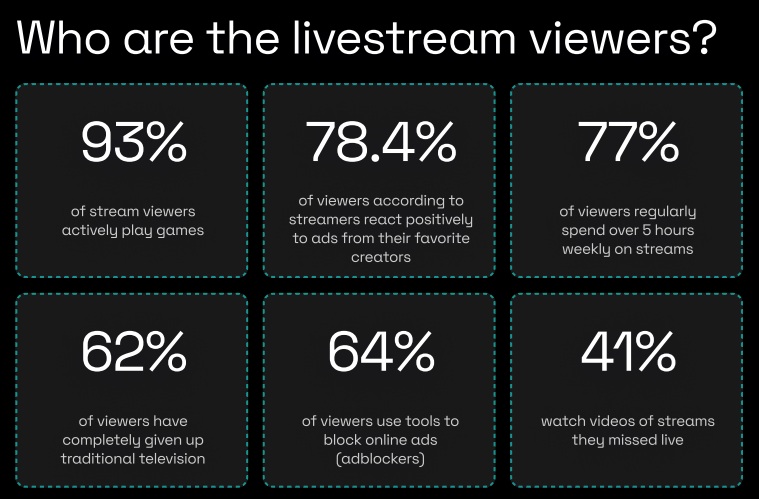
- 62% of live-stream viewers in Poland have abandoned traditional TV entirely, signalling a structural media shift toward digital-first entertainment.
- 93% of viewers actively play games, showing that gaming is not a niche but a cultural core for young audiences.
- 73% of viewers engage via chat, demonstrating that Gen Z prefers interactive, participatory content ecosystems rather than passive watching.
These behaviours illustrate a generation defined not by platform loyalty but by interactivity, co-creation, and immediacy.
The True Gen Z Market Size: Purchasing Power and Cultural Reach
Gen Z’s market size extends well beyond their direct spending. Globally, their disposable income is often estimated in the hundreds of billions of dollars, and their indirect influence (decisions made within households) pushes their effective buying power even higher.
They are also one of the most powerful cultural forces shaping the global creator economy, streaming ecosystems and digital commerce. Several macro trends underline this influence:
- The live-streaming market alone is expected to reach USD 15.32 billion in 2025, with 1.5 billion users projected for the same year (Live Streaming Trendy 2025 Report).
- Gen Z drives the aesthetics, humour, formats, and purchase signals across major digital platforms.
- Their online-first lifestyle means brands must meet them across ecosystems such as Twitch, TikTok, YouTube, Discord, Fortnite or Roblox.
Gen Z market size is therefore not just a financial category. It is an ecosystem-level influence, affecting what becomes popular, desirable and culturally validated.
Why Gen Z Matters to Marketers: Five Strategic Reasons
Understanding why Gen Z is important to marketers requires looking beyond demographics. The most relevant factors relate to attention, authenticity, and influence.
-
Gen Z Reshapes Attention: From Passive Media to Interactive Streams
Traditional ads struggle because Gen Z does not consume traditional formats. Young audiences spend hours daily inside interactive digital environments – not passively watching TV or browsing static content.
According to the Live Streaming Trends 2025 Report:
- 77% of viewers spend more than five hours weekly on streams, with a significant portion exceeding 20 hours.
- Co-presence and emotional engagement are central.
- Real-time chat participation forms a two-way relationship between creators and audiences.
For marketers, this means attention must be earned, not forced.
-
Gen Z Sets Trends, Not Follows Them
Gen Z behaviours influence other age groups and mainstream media. Trends originating in streaming or creator spaces rapidly migrate to social platforms and even traditional media.
Examples highlighted in the 2025 Report include:
- The GTA RP phenomenon generating 1.4 billion hours watched globally.
- Esports co-streams accounting for 40% of all esports viewership – proving personality-driven content increasingly outperforms official channels.
This generation shapes what is cool, aspirational, and shareable.
-
Gen Z Rejects Traditional Advertising
Gen Z is the most ad-resistant generation to date:
- 64% of viewers use ad blockers, making classic display formats significantly less effective.
- However, 79% of Twitch viewers perceive creator-linked ads positively, because they support the streamer and feel natural within the context.
Brands must therefore prioritise non-intrusive, contextual experiences that integrate with culture, not interrupt it.
-
Gen Z Rewards Authenticity
According to industry experts cited in the Live Streaming Trendy 2025 Report, Gen Z has a highly tuned “bullshit detector”. Attempts to mimic youth culture without understanding it result in rejection or ridicule.
This generation values:
- creators who speak honestly,
- brands that align with their identity and values,
- transparency, humour and cultural fluency.
Campaigns succeed when they feel native to the environment, not imposed.
-
Gen Z Drives the Creator Economy
Gen Z is both the audience and the talent:
- 45% of Polish live-stream viewers also stream or plan to start, according to the Report.
This creates an ecosystem where everyone can be a participant, not just a spectator. For marketers, it means creators are not “media placements” but cultural co-authors.
Where Gen Z Spends Their Time: Platforms and Behaviours
Twitch remains the leading global streaming platform, with:
- 2.5 million viewers at any moment,
- 7 million monthly streamers,
- extremely high user loyalty and direct traffic dominance.
But Gen Z is multiscreen-native and platform-agnostic. They fluidly move between:
- Twitch (long-form live entertainment),
- TikTok (real-time discovery and micro-moments),
- YouTube (VOD, esports, tutorials),
- Discord (community infrastructure),
- Roblox & Fortnite (spatial digital worlds),
- Instagram & X (identity expression).
For marketers, this means planning communication across ecosystem behaviour, not channel silos.
How Gen Z Shapes the Future of Marketing: Context, Technology and Non-Intrusive Design
To reach Gen Z, brands must shift from display advertising to contextual presence – being part of the moment, not forcing attention. This is where contextual streaming technology plays a role.
Contextual Interactions Driven by Technology
The inStreamly Feature framework enables non-intrusive branded moments that respond to what happens on stream, such as:
- Gameplay Reaction Feature – artwork reacts to in-game events (win, loss, health drop).
- Voice Recognition Feature – artwork appears when a streamer says specific words.
- Dynamic Copy Feature – rotating messages ensure freshness and reduce repetition.
These formats work because they respect the experience and embed the brand into the flow of the stream.
How This Works in Practice – Our Case Study Examples
Sprite – Heat Happens – Game Recognition Feature
Artwork appeared when streamers lost or expressed frustration.
Result: 530,000 views, strong positive reactions.
Why it mattered: The brand responded to emotion rather than interrupting it.
Cheetos – Chepard Game
The first branded virtual pet integrated into Twitch chat-controlled actions.
Result: 3.2M views, 50,000+ interactions, +11 pp brand affinity.
Why it mattered: Gen Z engaged because the experience was fun, persistent, and co-created.
Monte Snack – Voice Recognition Feature
Brand appeared when streamers naturally said “break” or related words.
Result: 1.75M impressions, high contextual relevance.
Why it mattered: The brand aligned perfectly with the culture of gaming breaks.
These examples reflect a core truth: Gen Z doesn’t hate advertising – they hate being interrupted.
Forecast: What Gen Z Will Expect in 2025-2030
Insights from the Live Streaming Trends 2025 Report point to several emerging expectations:
1. AI-Augmented Creators
Creators increasingly rely on automation, AI-assisted editing and virtual identities.
2. Multi-Platform Identity
Simulcasting, cross-posting and platform fluidity become default behaviours.
3. Participatory Campaigns
Viewers expect to influence what happens on stream – voting, triggers, chat-controlled interactions.
4. Immersive and Contextual Brand Experiences
Brands must integrate with gameplay, live emotion, narrative and creator flow.
5. Real-Time, Always-On Entertainment
Static content loses relevance; everything moves toward dynamic formats.
For marketers, the next five years require reorganising around real-time attention markets.
Gen Z Market Size and Marketing Imperatives for 2026
The Gen Z market size is substantial in both purchasing power and cultural influence. This generation shapes digital culture, establishes trends, and pushes brands toward authenticity, interactivity and respect for user attention.
So why is Gen Z important to marketers?
Because they set the expectations for the next decade of media, technology and brand behaviour. Winning Gen Z requires strategic consistency, cultural resonance and the ability to integrate seamlessly into real-time digital experiences.
Sources
- inStreamly – Live Streaming Trendy 2025 Report – key data on streaming audiences, behaviours, platform dynamics and advertising trends.


![Which Live Streaming Platform Pays The Most? [2026]](https://wordpress-instreamly.s3.eu-west-2.amazonaws.com/wp-content/uploads/2023/01/13102041/medium-shot-gamer-playing-computer-2-1.jpg)