Black Friday marketing: Why brands should reach gamers before deal week
Gen Z enters the 2026 holiday season with less money and a firmer plan. PwC’s Holiday Outlook 2026 projects Gen Z gift spending down 9% year over year and travel spending down 29%. Last season, TD Bank’s Merry Money survey found that 90% of Gen Z respondents planned their holiday purchases around events like Black Friday and Cyber Monday.
Smaller budgets and planned purchases change the job of a Black Friday campaign. The goal is a place on a short list the shopper writes before deal week. An impulse buy during deal week is the exception.
Most Black Friday media budgets still chase that shopper in the same placements: display, pre-roll and social feeds at peak ad load. Gamers are hard to reach there, even though they are one of the most valuable audiences of the season. They spend their Q4 evenings in live streams, and in-stream formats reach the viewers that blocked banners never touch.

Why does the Gen Z shortlist close before Black Friday week?
It closes early because young shoppers start early. YPulse’s 2026 Holiday Shopping and Winter Plans Report found that many 13 to 39-year-olds begin holiday shopping before Black Friday arrives. Across all shoppers, Salsify’s 2026 Holiday Pulse Report puts 16% starting in October and another 25% in November.
By the time deal week opens, a deal-driven Gen Z shopper already knows what they want, roughly what it should cost and which stores to check. A brand that first appears on Black Friday competes on price alone, against every retailer discounting the same category.
Awareness in October and early November decides who makes the list. Black Friday week turns the list into orders. Plan them as two separate jobs, with separate formats and separate KPIs.
Gamers are the high-value buyers most Black Friday ads miss
Black Friday brings the heaviest ad load of the year to TV, social feeds and display. Gamers are among the hardest viewers to reach in those channels. According to inStreamly’s Live Streaming Trends 2025 report:
- 64% of gamers use ad blockers. A blocked banner never renders, so the budget behind it reaches no one.
- 62% of livestream viewers have abandoned traditional TV. Holiday TV flights miss them entirely.
- 77% of viewers watch livestreams 5+ hours a week. The attention exists. It sits somewhere most media plans don’t buy.
Streamlabs and Stream Hatchet counted 20.9 billion hours watched across live streaming platforms in Q4 2025. That is the season this audience spends watching streams while brands fight over the same retail banners. For more on why display misses this group, see How Many People Use Ad Blockers and What It Means for Marketers in 2026.
The audience is worth the effort because it spends. A July 2025 IAB Poland study of 1,001 consumers found that gamers spend more on entertainment than non-gamers, and that 82% of gamers prefer buying online, compared with 65% of non-gamers. Entertainment, electronics and treats are discretionary purchases. Those are the categories Black Friday sells.
What gamers buy for the holidays is not only games
G2A.COM data shows gaming gift card and voucher purchases rose 64% year over year in the first half of 2026. At the same time, 78% of Gen Z say they’re prioritizing screen-free gifts, a category Fortune’s coverage of the PwC report describes as puzzles, art supplies and gift cards.
For non-endemic brands, the takeaway is practical. Gamers are the audience, and the product does not need to be a game. FMCG, electronics, fashion, retail and banking brands all sell to them.
Which stream format fits which holiday objective?
The right format depends on the stage of the shopping list. Build awareness while the list is being written, push the deal while it is being executed, and send reminders while gifts are still missing.
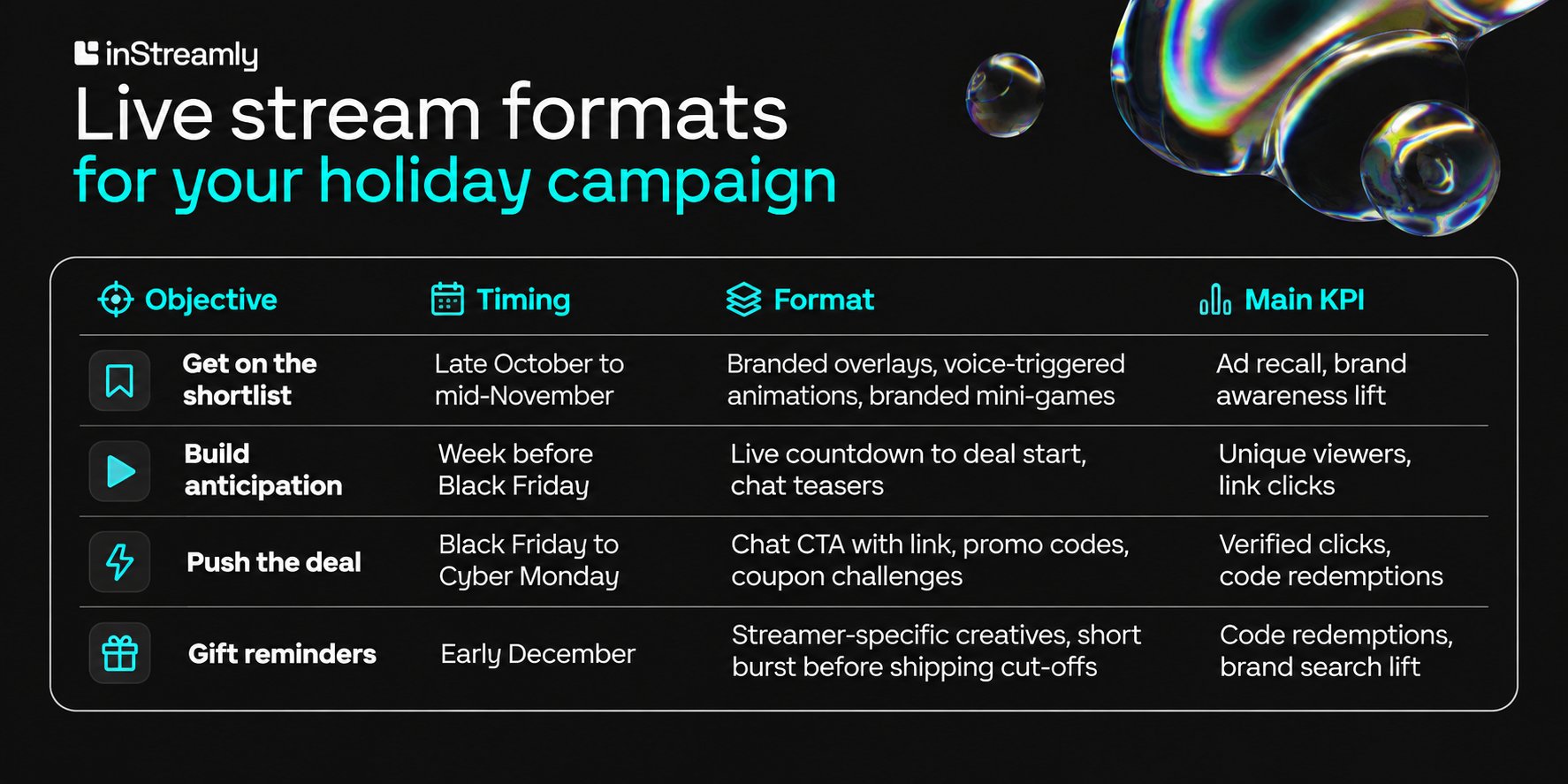
Three of these formats are worth a closer look for Black Friday.
Countdown to the deal. inStreamly’s Countdown Feature renders a live timer inside the stream that ticks toward a launch moment. Run it across hundreds of streams in the days before Black Friday and the deal start becomes an event viewers watch approach. When the timer hits zero, the offer link drops into chat.
Coupon challenges. The streamer gets an in-game goal, such as a set number of wins in one session. When they hit it, a discount code goes live for their viewers and stays valid for a short window, for example 48 hours. Chat watches the attempt live, the streamer plays for their audience, and the code comes with a deadline built in.
Voice-triggered animations. inStreamly’s Voice Recognition Mechanism detects a keyword spoken by the streamer and plays a branded animation at that moment. For the awareness phase, tie the keyword to something streamers say naturally, like taking a break or getting hungry, so the brand shows up in context instead of interrupting.
Campaign size fits small and large retailers
The size of a live stream campaign depends on how many streamers you book. There is no fixed package to buy into. Monte Snack ran voice-triggered ads on 147 streamers over about six weeks. SteelSeries ran on 2,045 streamers at the same time. A regional e-shop can start with one market and a few dozen creators, while a national retailer can cover several markets in one flight.
A holiday timeline for live stream campaigns
Count backwards from Black Friday on 27 November and Cyber Monday on 30 November:
- Late October to mid-November: awareness. Run across a wide streamer network with overlays, voice triggers or a branded game. The goal here is recall. Clicks come later.
- The week before Black Friday: countdown. Start the live countdown to your deal and switch on chat CTAs that lead to an early-access page or wishlist.
- Black Friday to Cyber Monday: conversion. Swap creatives to the offer, use trackable links and unique codes, and run coupon challenges in this window.
- Early December: reminder flight. Run a short burst before your shipping cut-off with streamer-specific creatives. Field the brand lift study after this flight ends.
If you are planning in November, the awareness phase is already short. A compressed plan still works: a countdown in the week before Black Friday, a conversion push across the long weekend and a December reminder flight. Expect lower recall gains than with a full October start, and set KPIs accordingly. How to Build Brand Awareness With Gen Z Through Gaming covers the longer awareness build in more detail.
Pre-launch checklist
What do timed campaigns deliver that bigger budgets don’t?
They deliver higher recall per impression, because the message lands when it matches what is happening on screen. Three inStreamly campaigns show the pattern:
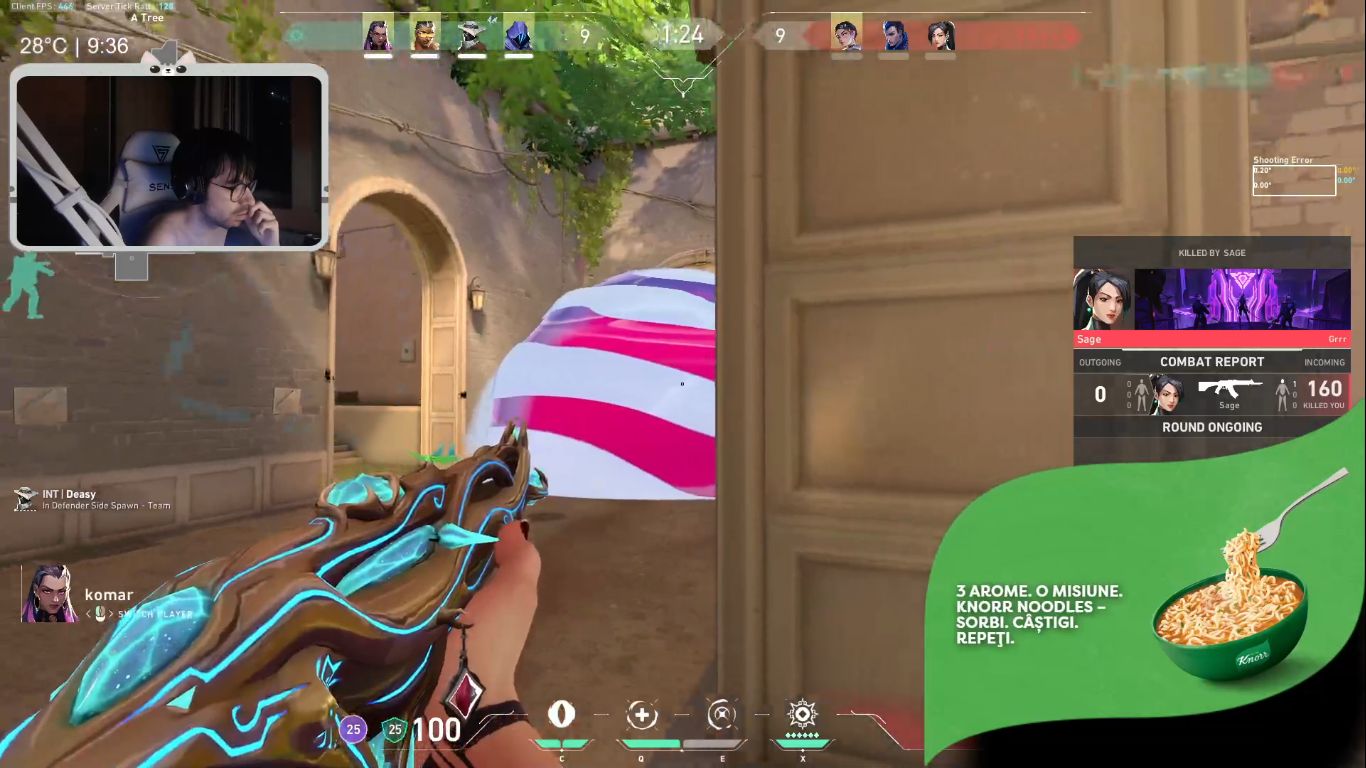
- Knorr: voice-triggered ads timed to relevant moments in the stream lifted ad recall by 52 percentage points and top-of-mind awareness by 45pp.
- Dr. Oetker Guseppe: 1,896 streamer-specific creatives produced over 48,000 pizza-related chat messages and raised purchase consideration by 11pp, from 53% to 64%.
- DAZN: a countdown across 412 streamers on Twitch and Kick ran for 96 hours before a title fight. It reached about 200,000 unique viewers and carried a 30% discount code.
The averages hold up beyond single cases. Across 33 brand lift studies in the first half of 2026, inStreamly campaigns averaged +19pp ad recall and +5pp brand consideration.
For Black Friday, the DAZN setup translates almost directly: a countdown that builds anticipation, a code that rewards viewers who were there when it ended, and a fixed window that creates urgency.
How to measure whether the holiday campaign sold anything
Connect every stage of the flight to a number your finance team accepts. Four tools cover most of it:
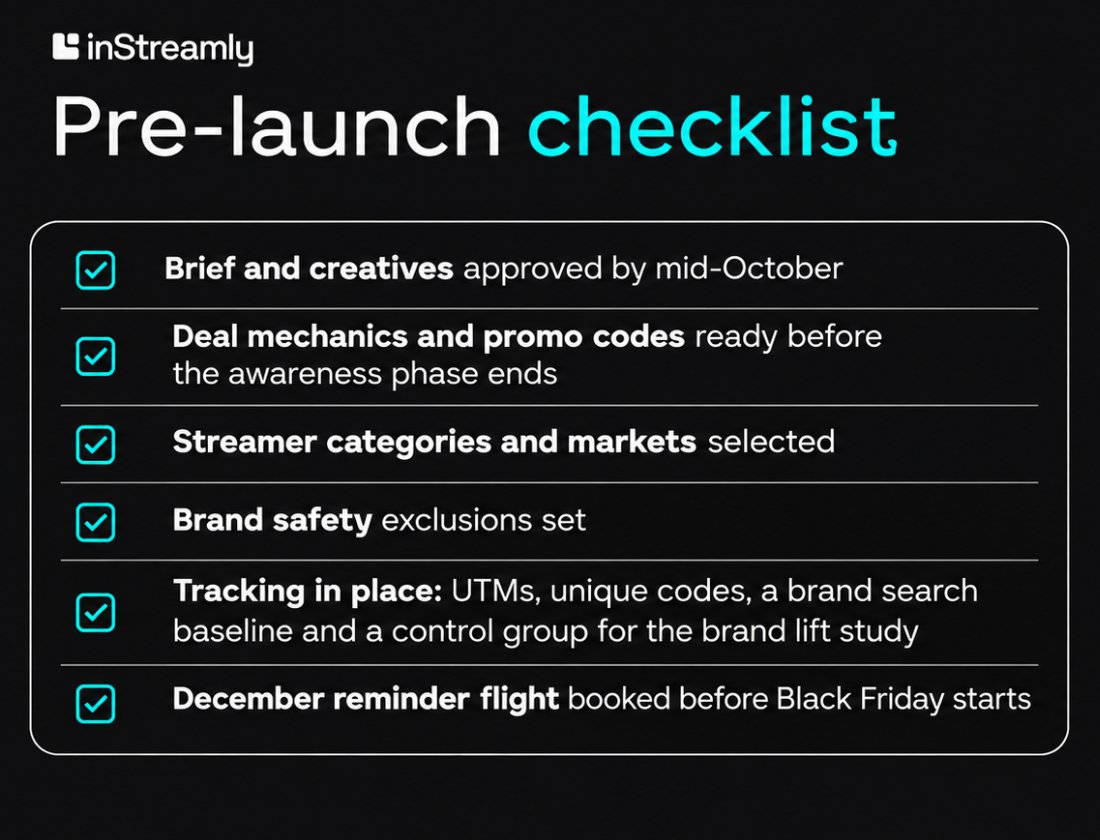
- Unique promo codes per campaign, per market or per streamer tier. Redemptions show which part of the network converted.
- Chat CTA links with UTMs, counted through Verified Clicks. This bot-filtering system means every reported click comes from a human viewer.
- Brand search lift. Record a search baseline before launch, then compare branded search volume during and after the flight.
- Brand lift study. Survey an exposed group and a control group for ad recall and purchase consideration. Measure after the December flight so the result reflects the whole season.
Agree on attribution rules before launch, including which touchpoint gets credit when a viewer saw both the awareness and the conversion phase. Codes and clicks show the short-term sale. Search lift and brand lift show whether the brand will be on next season’s shortlist as well.
Key takeaways
- Gen Z plans holiday purchases around deal days with smaller budgets. A Black Friday campaign has to win a place on that list in October and early November, before deal week starts.
- Gamers spend more on entertainment and prefer buying online, yet 64% block ads. In-stream formats reach them inside the content they already watch for 5+ hours a week, at any campaign size.
- Run the season in three stages: awareness, a countdown with codes, and a December reminder. Track each stage with unique codes, verified clicks, search lift and a brand lift study.