How to Build Brand Awareness With Gen Z Through Gaming
What brand awareness means, and why affinity is the real prize
- Reach describes how many people an ad was delivered to
- Awareness describes whether anything changed in what those people know
- Affinity goes one step further: not just “I know this brand” but “I like this brand”
Why is Gen Z so hard to reach with traditional advertising?
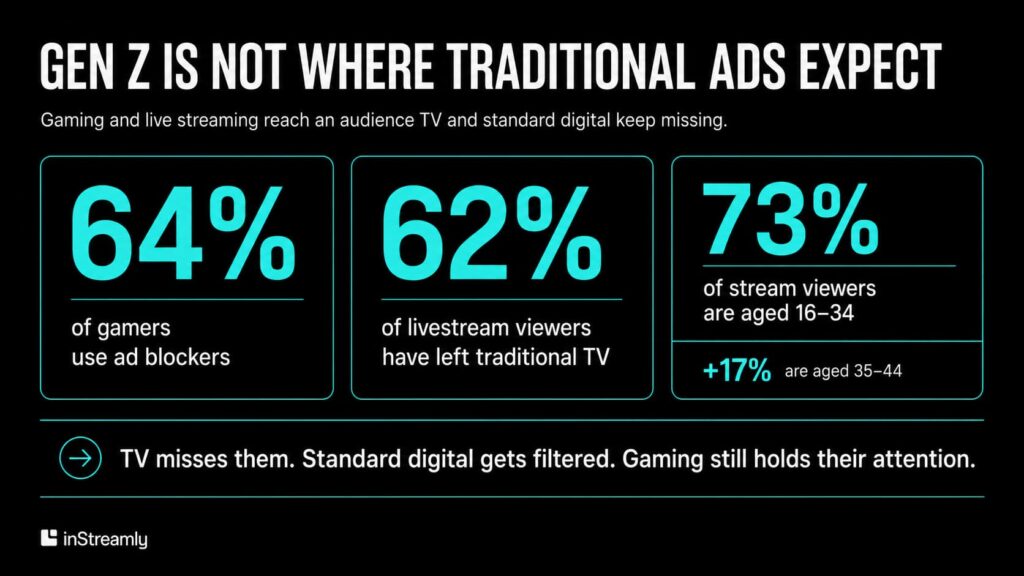
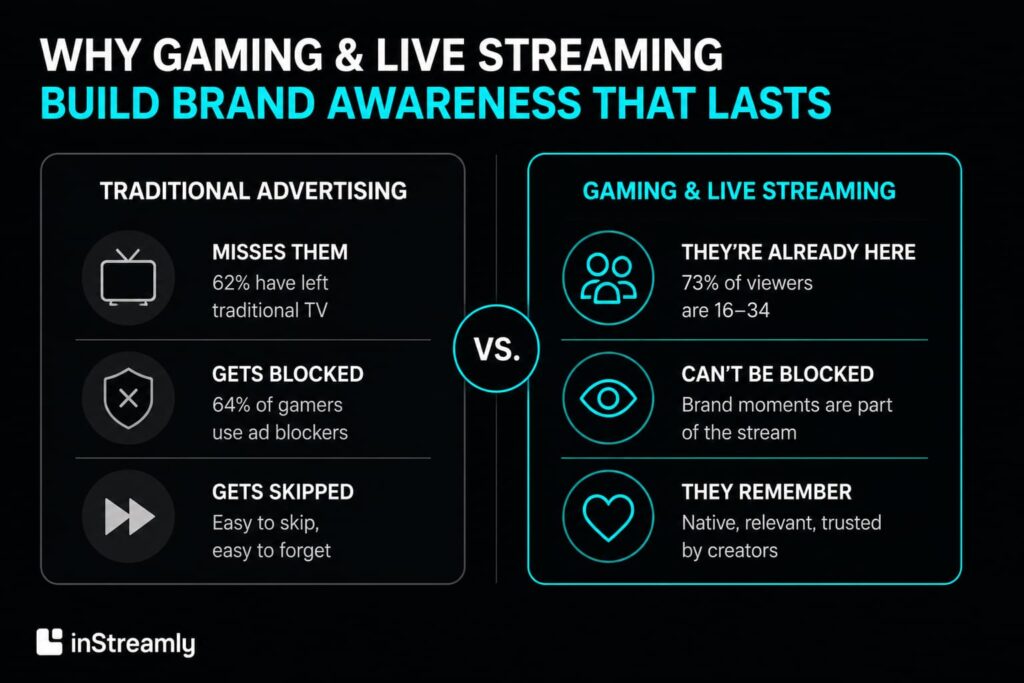
- 64% of gamers use ad blockers, removing a large share of any programmatic display or pre-roll buy before it renders
- 62% of livestream viewers have abandoned traditional TV entirely
Why gaming works as a brand awareness channel for Gen Z
Gaming is not a niche hobby for this audience. It is where they spend leisure time, and increasingly where they spend it with other people. 73% of stream viewers are aged 16 to 34, with another 17% between 35 and 44, concentrating streaming in exactly the age range most brands chase.
The deeper reason is cultural, not just demographic. Live streams and gaming communities are where a large share of youth culture actually forms: formats, in-jokes, and slang travel out before they show up anywhere mainstream. A brand present inside that space is at the source, not arriving after the trend has moved on. Combine that with an audience that filters out interruptive advertising by habit, and gaming becomes one of the few places a brand can build awareness without being blocked or skipped.
What tools actually build brand awareness in gaming?
- Gaming media buys: standard display and video placements bought inside gaming content and media properties. This gets a brand visible in the right environment, but it is still an external ad subject to the same blocking and skipping behavior that limits it everywhere else.
- Contextual integration inside the stream itself: brand appearances woven into what is actually happening while a streamer plays. This is where inStreamly operates, reading a spoken word, a chat message, or a moment in the gameplay, and triggering a branded moment at exactly the point it is relevant. Because the brand element originates from inside the stream rather than an external ad call, it is not something a blocker can intercept.
- Voice recognition: triggers a branded animation the moment a streamer says a relevant word
- Chat analysis: fires when a relevant keyword appears in viewer chat
- Gameplay analysis: ties a brand appearance to a live in-game event: a win, a loss, an energy drop
Why creator collaboration builds awareness, not just reach
Do gaming campaigns actually move brand awareness and affinity together?
- Dr. Oetker’s Guseppe pizza campaign used 1,896 personalized creatives, one per streamer, and delivered a +33pp lift in ad recall alongside a +11pp rise in purchase consideration. Each integration felt native to the channel it appeared on instead of generic.
- Cheetos’ Chepard Game, a Tamagotchi-style virtual pet viewers raised together through chat commands across 220 simultaneous Twitch streams, reached 3.2 million views and lifted brand awareness recognition by 6 percentage points. It hit its engagement target because it gave viewers something to do together, not something to watch happen to them.
- T-Mobile’s “Fastest Network” campaign built around a single phrase triggered whenever a streamer said it on air. Streamers said it organically more than 10,000 times, driving a +11pp lift in brand recall and a +16pp lift in brand affinity, without being paid per mention.
How do you measure whether a gaming awareness campaign worked?
- Recruit respondents across a range of creators, not one fan base, since a single community’s opinion of a brand it already likes is not a read on broader awareness
- Use a sample large enough to be meaningful, typically 500 or more respondents per group
Checklist for setting this up before launch:
- Baseline awareness and affinity measured before any media runs
- A control group matched on demographics and platform usage
- Respondents drawn from multiple creators, not one
- Unaided recall questions for awareness, separate favorability questions for affinity, not one set standing in for both
Is your brand ready to build awareness in gaming?
Before committing a plan, check for four things:
- Audience overlap with gaming and streaming
- Creative built for the platform, not adapted from a TV script
- A plan spanning multiple creators
- A measurement plan in place before launch, not added afterward
- Gaming reaches Gen Z where TV and standard digital cannot: 64% use ad blockers, 62% have left TV entirely
- Contextual integration inside a stream builds awareness a blocker cannot filter out, unlike standard gaming media buys
- The strongest campaigns move awareness and affinity together, not one at the expense of the other
- Measuring the result requires a brand lift study with a control group and respondents from multiple creators