Twitch Slang You Need To Know In 2026

Becoming a live streamer can be overwhelming, especially if you have yet to gain experience on Twitch or in Twitch slang. The entry threshold for new users is pretty high, especially regarding language. Twitch is one of many streaming platforms; however, it is the most popular. Why? Because of its unique culture. While the chat feature is available on every other platform, like YouTube or Facebook Gaming, none developed such a distinctive community, culture, or slang, as Twitch.
The key to understanding other viewers is the knowledge of slang words they use to express their emotions on the chat. But fear not! To help you, we’ve prepared a complete dictionary of the Twitch slang you need to know in 2024!
Table of contents:
Technical terms
Chat slang
Emotes
Technical terms
Admins: Twitch employees who help enforce the platform’s Terms of Service and take action when rules are broken.
Affiliates: Streamers who reached Twitch Affiliate, the first tier of the Twitch monetization program. Affiliates can earn money through subscriptions, Bits, and ads, and may later grow into Twitch Partners.
Alerts: Special notifications that appear on stream to highlight things like new followers, subscribers, donations, gifted subs, or other viewer interactions. They are usually powered by third-party tools.
Ban: A disciplinary action for breaking Twitch rules or a channel’s rules. A ban can be temporary or permanent. On Twitch, banned content becomes unavailable, and if a user is banned from a channel, they lose access to its chat.
Bandwidth: The amount of data that can be transferred through a network in a given time. Streaming uses upload bandwidth, and the higher your settings, the more data your stream consumes.
Bits: Twitch’s internal currency. Viewers can buy Bits and use them to support streamers through Cheers. Each Bit is worth one US cent to the streamer.
Bitrate: The amount of data sent to Twitch during a stream. A higher bitrate usually means better image quality, but it also requires stronger internet upload speed.
Bots: Automated programs used to perform tasks in chat or on stream. Some bots help moderate chat or run commands, while malicious bots may spam or abuse channels.
Categories: Categories group streams by game, activity, or content type. Viewers can browse them to discover streams, and creators choose the category that best matches what they are streaming.
Chatters: Users connected to a stream’s chat. This number is different from viewer count, because not everyone in chat is necessarily watching, and not every viewer interacts in chat.
Cheers: The act of supporting a streamer with Bits. For example, typing Cheer100 in chat sends 100 Bits to that streamer.
Cheer Badges: Badges earned by cheering in a specific channel. They show other viewers how much support someone has given in that channel.
Cheermotes: Twitch emotes tied to Bits. They are used when viewers Cheer and can be customized by eligible creators.
Clips: Short snippets taken from a livestream or VOD. They are often used to share funny, impressive, or memorable moments.
Commands: Words or phrases typed in chat to trigger an action. Twitch commands usually begin with “/”, while bot commands often begin with “!”.
Concurrent Viewers: The number of viewers watching a stream at the same time.
Delays: The gap between what happens live and when viewers actually see it on stream.
Discord: A communication platform widely used by streamers and their communities. Many creators run Discord servers where viewers can chat, get updates, or join community activities.
Donations: Direct financial support sent to streamers, usually through third-party payment services or sometimes through Twitch-related tools like Bits.
Emotes: Images or animated graphics used in chat. Twitch creators can unlock their own emotes, and many viewers also use additional emotes through third-party extensions such as BTTV, FFZ, and 7TV.
Founder’s Badge: A subscriber badge reserved for the earliest paid or Prime subscribers of a channel.
FPS (Frames per second) / Framerate: A measurement of how many frames are shown each second. Along with resolution and bitrate, it is one of the key settings affecting stream quality.
Highlights: Saved parts of previous streams that creators keep on their channel for viewers to watch later.
HUD: Short for Heads-Up Display. In streaming, it usually refers to on-screen visual elements such as alerts, counters, subscriber notifications, or other overlay information.
Low Latency: A mode that reduces the delay between the streamer’s broadcast and what viewers see, making chat interaction more immediate.
Midroll / Preroll: Twitch ads. Midrolls run during a stream, while prerolls appear before a viewer starts watching.
Moobot: A moderation bot that helps manage chat, automate commands, and reduce spam.
Nightbot: A popular chat bot used for moderation, commands, scheduled messages, and viewer engagement tools.
OBS: Short for Open Broadcaster Software. One of the most popular tools for live streaming and recording content.
Overlays: Graphics or animations placed over the stream layout. They usually sit around the edges of the screen and often match the streamer’s branding.
Panels: Rectangular sections shown below a Twitch stream. They usually contain information about the streamer, links, rules, or social media.
Partner: Twitch’s highest creator tier. Partners gain access to advanced monetization features, stronger channel customization, and additional platform benefits.
Prime: A benefit connected to Amazon Prime that includes Twitch perks like one monthly channel subscription and other bonuses.
Shadow ban: A term sometimes used when a channel appears limited in visibility without being fully removed from the platform. It is more of a community phrase than an official Twitch category.
Shared Chat: A Twitch feature used during Stream Together sessions that combines the chats of collaborating creators into one shared conversation.
Shoutout: A built-in Twitch feature used to recommend another creator to your viewers. Moderators and streamers can trigger it with the /shoutout command.
Squad Mode or Squad Stream: A legacy Twitch collaboration format that allowed multiple creators to appear together in one shared viewing layout.
Stream Together: Twitch’s native collaboration feature that lets creators stream together across multiple live channels or invite guests onto a single channel.
Stream Directory: The section of Twitch where channels are organized into categories, making them easier to browse and discover.
Subscription, aka Subs: A paid monthly way for viewers to support a streamer. Subscribers usually get benefits like emotes, badges, and other channel perks.
Subathon: A type of stream where subscriptions, donations, or other support extend a timer, making the stream continue longer.
Teams: Groups of streamers connected under one shared Twitch team page. Some creators join existing teams, while others may be invited into them.
Turbo (AdFree): Twitch’s premium monthly subscription that removes most ads, adds chat customization features, and extends VOD storage.
Verified: A channel marked with Twitch’s verification badge, showing that the account is recognized as authentic by the platform.
VoD: Short for video on demand. On Twitch, this includes past broadcasts, highlights, and uploads available after a stream ends. Standard past broadcasts are usually stored for a limited time, while highlights remain until deleted by the creator.
Vstream: Short for virtual stream. A vstream usually means streaming without showing your real face and using a virtual avatar instead.
Vtuber or vstreamer: A virtual streamer who uses an animated or digital avatar instead of a regular webcam feed.
Whisper: Twitch’s private messaging feature that allows users to message each other directly.
Chat Slang

7tv: Similar to BTTV, 7TV is an emote platform and extension used to add extra emotes and chat features on streaming platforms.
Andy: A broad Twitch term attached to many names and stereotypes. It often gets used jokingly and does not always have one fixed meaning.
Ate: Used when someone did something extremely well or completely nailed a moment. It often appears as a quick reaction to a great play, performance, or post.
Aura: Refers to the overall energy, presence, or vibe someone gives off. If a streamer does something cool or confident, viewers may joke that their aura just went up.
Brain Rot: A joking way to describe being overly consumed by chaotic internet content, memes, or short-form videos. It can also describe a trend that completely takes over someone’s feed or sense of humor.
Botting, or Viewbotting: The act of buying or using bots to artificially increase viewer numbers or engagement.
Brigading: When a group from one community enters another chat, server, or space in a coordinated way, often to troll, spam, or harass.
BTTV (Better Twitch TV): A browser extension that adds custom emotes and extra chat features to Twitch.
Canon / Headcanon: Borrowed from fandom culture. Canon means something is officially part of a story, while headcanon is a personal theory or interpretation someone chooses to believe.
Caught in 4K: Means someone got exposed with obvious proof. It is often used when a person is clearly caught doing something embarrassing, dishonest, or contradictory.
Chat: A way of addressing a group of viewers during a stream. Streamers often say things like “Chat, did you see that?” and people now also use it jokingly outside of streaming.
Clocked / Clocking: Means noticing something immediately, especially a lie, strange behavior, or something another person was trying to hide.
Collab: Short for collaboration.
Clip Chimp: A person who creates or shares out-of-context clips of a streamer, often to embarrass them or turn a moment into drama.
Cooked: Used when someone is exhausted, overwhelmed, finished, or obviously in trouble. Depending on context, it can mean mentally drained, physically tired, or simply doomed.
Crash Out: Means reacting in a reckless, overly emotional, or self-destructive way. It is usually said jokingly when someone looks like they are about to completely lose it.
F: A way of paying respects, especially in a sad, unfortunate, or ironic situation.
FFZ (FrankerFaceZ): A Twitch extension that adds custom emotes, chat customization, and other quality-of-life features.
FPS (First Person Shooter): A game genre where the action is shown from the player’s first-person perspective, usually centered around weapons.
Hate Raid: An organized attack where users flood someone’s chat with harassment, insults, or abusive messages.
Hype / Hype Train: A Twitch event or general moment of community excitement when viewers support a streamer together, often through subs, Bits, or gifts.
IRL: Short for “in real life.”
Ick: A small thing that suddenly makes someone lose interest or feel put off. It often refers to something oddly specific that changes how a person is seen.
It’s Giving: Used when something strongly reminds you of a mood, person, aesthetic, or vibe. It usually means “this has the energy of…”
Let Them Cook: Means someone should be allowed to continue what they are doing because the outcome might end up being impressive.
Lock In: A phrase used to tell someone to focus, get serious, and stop getting distracted.
Main Character Energy: Describes someone who acts like the center of the moment in a bold, memorable, or highly noticeable way.
Mid: A blunt way to say that something is average, underwhelming, or not as good as people say it is.
Mod: Short for moderator.
NPC: Originally a gaming term meaning non-player character. Online, it is used for someone acting bland, repetitive, scripted, or lacking originality.
Ohio: A meme term used to describe something weird, cursed, awkward, or bizarre in an exaggerated way.
POV: Short for “point of view.” Online, it is often used to introduce a relatable situation, joke, or scenario.
Pressed: Means annoyed, upset, or bothered, often more than necessary.
Raids: When a streamer sends their live audience into another streamer’s channel at the end of a broadcast.
Receipts: Proof or evidence, usually in the form of screenshots, clips, or saved messages.
Rent Free: Used when something keeps taking up space in your mind even though you did not ask for it.
Rerun: A recorded stream broadcast again as if it were live.
Rizz: Short for charisma, especially the kind linked to flirting, charm, or smooth social confidence.
Say Less: Means “I understand” or “I’m already in.” It suggests no more explanation is needed.
Sigma: A slang term for someone seen as independent, self-contained, or unbothered. It is also often used ironically.
Side Quest: A funny way to describe a random detour or small unexpected activity that was not part of the original plan.
Skibidi: A nonsense meme word tied to absurd internet humor. It usually has no fixed meaning and is used mostly for comedic effect.
Slaps: Means something is extremely good, especially music, edits, or content with strong impact.
Stream Sniping: Using someone else’s live stream to gain an unfair advantage against them, most often in a game.
Staff: Twitch employees. In platform culture, the term usually refers to official Twitch team members, not moderators.
Sus: Short for suspicious. Used when something feels off, questionable, or untrustworthy.
Troll: Someone who deliberately disrupts chat, provokes others, or tries to get a reaction.
Touch Grass: A phrase used to tell someone they need a break from the internet and should reconnect with real life.
Tweaking: Means acting strangely, overreacting, or behaving in a way that feels off.
Twitch extensions: Tools made by third parties that add extra features to Twitch and enhance the viewing experience.
___ Core / Coded: Used to say that something strongly fits a certain aesthetic, mood, or recognizable style, such as “gamer-core” or “villain-coded.”
Emotes

You can find a complete database of Twitch emotes here.
4Head depicts a smiling streamer called Catburry. It is used as a reaction to a joke.
Cmonbruh is used to express confusion or to react to racist comments in the chat.
COPIUM in Twitch slang refers to the use of this fictional drug to cope with loss or failure. Generally, it is depicted using a Pepe the Frog meme that shows the character hooked to a Copium tank.
DansGame features the image of the popular Twitch streamer DansGaming. It indicates anger, revulsion, or annoyance.
GachiGASM shows great satisfaction with what’s just happened. It can also be used to say that we find a man attractive. If we want to say that a woman is appealing to us, we will use the Kreygasm emote.
Jebaited means someone is trolling or was just tricked.
Kappa is one of the most popular emotes on Twitch. When someone uses Kappa, you should know they are being sarcastic, ironic, trolling, or playing around in some other way.
KEKW is a FrankerFaceZ emote designed to represent laughter whenever something funny happens during streams. It became the most popular emote of 2020 and is based on the El Risitas clip.
Kreygasm, like GachiGASM, is used to show joy and satisfaction. It’s one of the oldest emotes on Twitch.
LUL is used when joining chat or welcoming someone to a stream. :LUL: Laughter. The emote version of Laugh Out Loud.
MonkaS emote shows anxiety and distress.
MonkaGIGA are MonkaS with even bigger eyes. This is just pure horror, my dudes.
MonkaW is a zoomed in MonkaS. Even more intense.
Pepe the frog is probably the most known cartoon frog in the universe. As a result, several Pepe-based Twitch slang emotes have become quite popular over the last few years.
PepeHands is another Pepe the frog emote. It’s used on Twitch when a user is trying to signify sadness (or pretending to be sad) or when the streamer seems upset about something.
PJ Salt is used when someone is salty about something. It can mean that the user is upset, bitter, or frustrated with something that happened on the stream, in the chat, or even IRL.
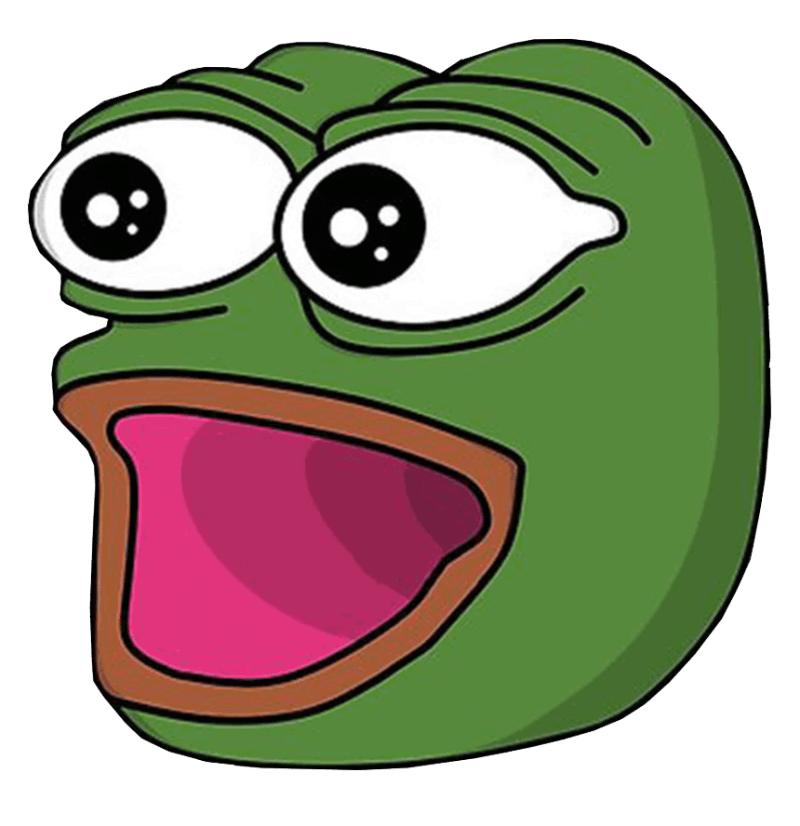
Pog/Poggers is the world’s most widely recognised Twitch emote. It is based on Pepe, and it’s meant to express joy, happiness, or even hype. But, unfortunately, it’s common to spam chats with massive waves of poggers.
Pogchamp is a legendary Twitch emote removed from the platform in 2021. It was used to express shock, surprise, or excitement.
Sadge, also known as :SadFrogFace:. The meaning of Sadge is sadness or disappointment.
SourPls emote works only with the BTTV plugin. It’s used to show happiness or emotion before a specific event. For example, this emote spreads happiness and joy equally and shows a guy dancing in a supermarket.
Trihard means the user is hyped about something that’s about to happen. According to Streamelements data, it’s the most used emote in Twitch slang.
Final Words
The Twitch slang can sometimes be challenging and confusing. Like every niche, streaming has its own internal rules. Hopefully, with the help of this dictionary, you won’t have any problems when your viewers type kappa, BTTV, or LUL in your chat anymore. If you need more help, be sure to check out our other articles like the
Top 8 Worst Mistakes Small Streamers Better Stop Making or How to Attract and Get More Viewers on Twitch!