Gen Z’s consumer mindset is shaped by constant connectivity, cultural fluency and a deep awareness of how brands behave in public. They’re quick to reward authenticity – and even quicker to reject anything that feels performative, intrusive or misaligned with their values. Understanding what drives their trust, what triggers their skepticism and how they interpret brand behaviour is the foundation of any effective Gen Z marketing strategy.
For BrandsMarketing02.12.2025

Gen Z Marketing: Complete Guide to Understanding and Reaching Generation Z
Generation Z is no longer “the next generation of consumers”. They are your current customers, decision-influencers and trendsetters. They’re digitally native, hyper-connected, deeply community-driven and ruthless toward anything that feels fake or intrusive. At the same time, they’re on track to become the largest and wealthiest consumer generation in history – global Gen Z spending is projected to reach around $12 trillion by 2030 according to NielsenIQ’s Spend Z report.
If you’re responsible for brand, digital or media, Gen Z marketing isn’t a side project anymore. It’s a strategic pillar. In this guide, we’ll walk through:
- Who Gen Z actually is (beyond the clichés)
- How they spend their time online
- What they expect from brands
- Why gaming and live streaming are mainstream Gen Z channels
- How to design non-intrusive, contextual campaigns that earn attention instead of forcing it
Who Is Generation Z – And Why They Matter for Marketers
Gen Z is usually defined as those born between 1997 and 2012, though exact cut-offs differ slightly by source. What matters more than the dates is the context: this is the first cohort that grew up with broadband, smartphones and social platforms as the default.
From a business perspective, three things make Gen Z critical:
- Scale and spending power
Gen Z is expected to become the largest and wealthiest generation, with global spending projected to hit $12T by 2030. - Influence on household decisions
Even before they reach peak income years, Gen Z shapes what families buy – from tech and entertainment to food delivery and travel. - Culture drivers
Memes, music, fashion, gaming, entertainment – the cultural “default” increasingly comes from Gen Z spaces like TikTok, Twitch, YouTube and Discord.
Demographics and Media Habits of Gen Z
Gen Z is not just “teens on TikTok”. They are young adults entering the workforce, studying, running side hustles, streaming and building their own audiences.
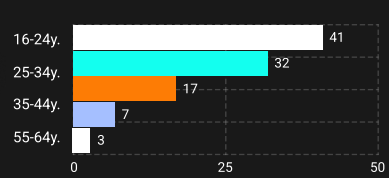
The community of streaming viewers crosses generational boundaries, bringing together representatives of Generation X, Z, and Millennials in a single digital entertainment environment. According to our Live Streaming Trends 2025 report, live-stream viewers (where Gen Z is heavily overrepresented) skew:
- 32% aged 16-24
- 41% aged 25-34
So when you plan Gen Z marketing, you’re not just talking to high-school students. You’re talking to young professionals, university students, junior managers – people who already make and influence purchase decisions.
From a media point of view, their behaviour looks radically different from previous generations:
- 93% of stream viewers actively play games themselves
- 77% spend 5+ hours weekly on streams
- 62% have completely given up traditional TV
That shift from TV to interactive, creator-driven environments is the foundation of effective Gen Z marketing.
Gen Z vs Millennials: What’s Really Different?
Millennials were the first generation to move online. Gen Z is the first to be born there. Key differences marketers feel in campaigns:
- Skepticism and the “bullshit detector”
Experts quoted in our Live Streaming Trends 2025 report point out that gaming and streaming audiences are extremely sensitive to inauthentic, poorly-fitted brand activity – and this is especially true for Gen Z. - Higher expectation of participation
Millennials accepted one-way storytelling. Gen Z expects to participate: vote, type in chat, co-create content, influence outcomes. - Values and identity link
Global research from NIQ shows strong ESG (Environmental, Social, and Governance) sentiment: Gen Z cares about environmental and ethical standards, and many say they will avoid brands that don’t align with their values.
For marketers, this means you can’t just repurpose millennial-era digital tactics into Gen Z environments and expect results.
What Is Gen Z Marketing?
Gen Z marketing is not “doing TikTok” or “working with a few influencers”.
It’s the systematic design of brand experiences around how Gen Z actually lives online:
- In communities, not just audiences
- In real time, not only in pre-produced formats
- In interactive environments like games and streams, not just feeds
Done well, Gen Z marketing connects:
- Channels – social, creators, streaming, gaming, community platforms
- Formats – short-form video, live, interactive overlays, branded mini-games
- Values – authenticity, diversity, humor, transparency, purpose
Core Principles of Gen Z Marketing
- Authenticity over polish
Gen Z is comfortable with “behind the scenes” and rough edges. Over-produced content that doesn’t match the channel feels fake. - Community-first thinking
You’re not talking to Gen Z; you’re entering their spaces. The question is: what value does your brand add to that community? - Non-intrusive, contextual experiences
In live streaming, our research shows that contextual ads – reacting to events in the game, the streamer’s voice or chat – are far better received than classic pre-rolls or mid-rolls. - Co-creation with creators and audiences
Creators are the “faces” Gen Z trusts. Activations that give them agency – and let their community play along – perform best. - Real-time interaction
Quest mechanics, live polls, voice triggers, nickname-based personalization – these are native to Gen Z media habits.
Gen Z’s attention isn’t just fragmented; it’s layered. One person might:
- Watch a stream
- Chat on Discord
- Scroll TikTok
- Play a mobile game
…all within the same evening. Your Gen Z marketing strategy has to acknowledge this multi-layer reality.
Social Platforms and Short-Form Video
Short-form video (TikTok, Reels, Shorts) is often the first touchpoint:
- Quick discovery
- Trends and memes
- Social proof and “vibes check” for brands
But it’s rarely where deep relationships are built. Think of it as a top-of-funnel culture scanner: a way to show that your brand understands the jokes, references and aesthetics Gen Z lives in.
For sustained attention, you need to move closer to where they actually hang out – which increasingly means live and interactive environments.
Live Streaming and Gaming as Gen Z Mainstream
Live streaming is now a mainstream entertainment category, not a niche. According to our Live Streaming Trends 2025 report:
- 31 million internet users watch their favourite streamers every day
- 42.8% of Gen Z in the US regularly watch streamers
- 93% of stream viewers play games
- 62% have given up traditional TV
Streaming isn’t “kids watching games”. It’s a full ecosystem:
- Competitive play and esports
- Just Chatting
- IRL travel and lifestyle
- Co-streamed events and talk shows
For Gen Z, streams are the digital equivalent of “hanging out with friends” – except one friend is a creator with thousands of viewers.
Creator Economy and Co-Streaming
Co-streaming – when creators restream official events with their own commentary – is now core to how Gen Z consumes big esports tournaments and launches. In the Live Streaming Trends 2025 report, 44% of esports viewership comes from co-streams rather than official channels. This has two implications for Gen Z marketing:
- Personality beats production value – audiences choose commentary they relate to, not just the “clean feed”.
- Distributed attention – you reach your audience through many creators, not just one big sponsorship.
Gen Z Consumer Mindset: Values, Trust and the Bullshit Detector
Authenticity, Purpose and Social Impact
Gen Z doesn’t expect brands to “save the world”. But they do expect:
- Clear values (and not only in Pride month).
- Real actions, not just statements.
- Consistency across channels and campaigns.
Campaigns that involve real contributions, such as charity collaborations or community-driven fundraisers, resonate especially well when they’re built with creators and communities, not just announced via TVC. In inStreamly’s case portfolio, large charity events co-created with streamers turned into major cultural and fundraising moments in the gaming community.
Ad Fatigue, Adblockers and Non-Intrusive Experiences
Based on the B2 Ad Blocker Usage Statistics 2024 report, globally, around 42% of internet users now use some form of ad blocking. Among younger users it’s higher: one study shows 45% of 18-24-year-olds using ad blockers.

Our dedicated survey among Polish stream viewers paints an even sharper picture:
- 48% use at least one ad-blocking plugin
- 16% use multiple ad-blocking tools
And yet – when ads are integrated naturally into streams:
- 41% of viewers react positively or very positively to ads that appear on their favourite streamers’ channels, because they see them as a way to support creators.
The lesson for Gen Z marketing is clear – the problem is not “advertising” itself. The problem is interruptive, irrelevant, low-value advertising.
Gen Z Marketing Channels and Tactics
There is no single “Gen Z platform”. Instead, think in layers:
- Discovery & trends – TikTok, Reels, Shorts
- Depth & storytelling – YouTube, long-form content
- Community & interaction – Twitch, Kick, Discord, Roblox, Fortnite, in-game and in-stream activations
Social-First Content Strategies
Your social strategy for Gen Z should focus on:
- Series, not one-offs – recurring formats create familiarity and memes.
- Native storytelling – hooks in the first seconds, fast pacing, strong visual language.
- Participation – asking for opinions, stitching, duets, challenges that fit the platform.
But social alone rarely builds the depth needed for preference shifts. That’s where creators and live environments come in.
Creator & Influencer Marketing for Gen Z
Creators are media, distribution and brand all in one. They translate your message into the language of their communities.
Key shifts when you plan Gen Z influencer marketing:
- Move from one-off posts to longer story arcs and integrated concepts.
- Don’t pick creators only by follower count – focus on fit with your category, values and tone.
- Give creators real agency in how they implement your message.
In practice, many of the most effective inStreamly campaigns combine hundreds of mid-sized streamers with a few larger faces, using technology to scale contextual placements across the whole long-tail.
Gaming and Live Streaming as a Gen Z Powerhouse
From a Gen Z perspective, gaming is not a niche hobby – it’s a default entertainment layer. Live Streaming Trends 2025 highlights that:
- 93% of stream viewers play games themselves
- They spend many hours weekly in gaming-related environments
- Categories like Just Chatting and GTA V (especially GTA RP) attract billions of hours watched globally
For Gen Z marketing, this means:
- You can reach them where they’re relaxed, engaged and emotionally invested.
- You can align your message with very specific contexts (breaks, wins, fails, key moments).
- You can integrate into the creator-community relationship instead of fighting it.
Deep Dive: Gen Z Marketing Through Gaming and Live Streaming
This is where inStreamly’s expertise lives – and where you can build real competitive advantage.
Why Gaming Is the Natural Home of Gen Z Marketing
In live streaming environments:
- Gamers are in their element – they’re doing what they love, with people they like.
- Attention is real – streams often run for hours, and viewers actively chat and react.
- TV and classic formats are out – 62% of stream viewers have stopped watching traditional TV altogether.
Categories like Just Chatting and GTA RP show that it’s not just about the game; it’s about personalities, stories and shared experiences.
Attention-First: Contextual, Non-Intrusive Formats
inStreamly’s technology allows brands to become part of the stream itself – without interrupting it.
Examples of contextual triggers:
- Something happens in the game (win, loss, low HP) → branded animation appears.
- The streamer says a given phrase → voice recognition triggers an artwork.
- The chat uses certain emojis or keywords → the creative reacts.
Instead of forcing a pre-roll, you reward attention that already exists. This “attention-first” approach is a core narrative in inStreamly’s content.
Features That Work Best for Gen Z
Several mechanics are especially powerful for Gen Z:
- Dynamic Copy Feature
The artwork rotates between multiple messages, so it doesn’t feel repetitive. Great for humour, storytelling and reacting to situations over time.
- Gameplay Reaction Feature (GRF)
Creatives respond to specific in-game events (victory, defeat, clutch play). Viewers perceive the brand as watching along with them.
- Voice Recognition Feature (VRF)
When the streamer naturally says certain words, animations appear. The brand becomes a running joke or ritual – not a forced insert.
- Brand Game Feature
Fully custom mini-games that live inside streams. Viewers can control characters or outcomes via chat commands, turning the brand into play.
All of these share one principle: the brand enhances the experience instead of taking it over.
Case Examples: How Brands Reach Gen Z Through Gaming
Let’s look at how this works in real campaigns.
Cheetos – “Cheetos Chepard Game”
Cheetos wanted to reach Gen Z and young millennials and fight ad-blocker usage, which affects 66% of Gen Z globally according to inStreamly’s analysis.
Together with inStreamly, they created Chepard – a virtual cheetah pet living on Twitch streams. Viewers controlled Chepard via chat commands (jump, run, interact), turning the brand into a playful side-character in the stream. The activation:
- Involved 220 streamers
- Generated 3.214 million views
- Created 50,000+ unique interactions
- Increased brand awareness by 6 percentage points
- Increased perception of Cheetos as a brand supporting streamers by 11 percentage points
This is textbook Gen Z marketing: fun, participatory, native to the culture and measurable.
Monte Snack – Voice-Triggered Breaks
Monte Snack wanted to own the “gaming break” moment. Using inStreamly’s AI Voice Recognition Mechanism, branded animations appeared whenever streamers said words like “pause”, “break” or “snack”.
Results:
- 1.75M impressions
- 0.69% CTR
- 147 streamers over six weeks
The brand didn’t force extra breaks; it surfaced exactly when breaks naturally happened, reinforcing the association in a way that felt intuitive for viewers.
Knorr × Żabka – Voice Recognition Activation
Knorr and Żabka needed to show that quick meals fit hectic, gaming-heavy lifestyles.
Using Voice Recognition, viewers encouraged streamers to say specific keywords which triggered Knorr creatives on screen. The more the chat played along, the more the brand appeared. The mini-casebook highlights strong organic engagement and “viral community behaviour” as key outcomes.
KPIs and Measurement in Gen Z Marketing
Measuring Gen Z marketing requires moving beyond traditional media KPIs and focusing on how young audiences actually respond, interact and carry your brand further into their communities. In environments like gaming and live streaming – where attention is earned rather than forced – the most valuable signals often come from engagement quality, cultural resonance and community behaviours, not just raw reach.
Beyond Reach and Impressions
Reach still matters, but for Gen Z you should also monitor:
- Number and quality of organic mentions in chat and on social
- Volume of UGC and memes around your activation
- Participation in community spaces (Discord joins, event sign-ups, tournament entries)
Brand Lift, Affinity and Recall
The T-Mobile “The Fastest Network” voice-triggered campaign is a good benchmark:
- +11 pp brand recall
- +6 pp top-of-mind
- +16 pp brand affinity
This was achieved by turning a product claim into a running community joke, activated thousands of times by streamers and viewers themselves.
Performance Metrics: Clicks, CTR and Conversions
Performance still matters – especially when your goal is sign-ups, installs or sales.
Campaigns like Monte Snack show that contextual streaming can deliver solid CTRs (0.69% in that case) at scale, with 1.75M impressions and six weeks of sustained presence.
Important: for Gen Z, clicks are a lagging indicator of interest. Often, they’ll search you directly later, discuss in Discord, or see your brand again through UGC and co-streams.
Common Mistakes in Gen Z Marketing (and How to Avoid Them)
Despite increasing investment in Gen Z, many brands still fall into predictable traps – from oversimplifying who Gen Z actually is to forcing outdated formats into modern, interactive environments. These missteps don’t just reduce campaign effectiveness; they actively damage credibility among an audience with a finely tuned bullshit detector. Understanding the most common pitfalls is the first step toward building strategies that truly resonate.
Treating Gen Z as One Homogenous Group
“Gen Z” covers high-school students, junior managers, creators, esports fans, casual mobile gamers, K-pop stans, financial minimalists and hypebeast collectors. That’s… a lot.
Fix: segment by culture and behaviour, not just age.
Copy-Pasting Traditional Ads into Gen Z Environments
Running a TV spot as a pre-roll before a stream is usually the least effective thing you can do. It ignores:
- The interaction between streamer and chat
- The long, lean-back nature of streams
- The desire for non-intrusive experiences
Fix: adapt your message into contextual, reactive formats that play along with what’s happening on screen.
Ignoring Creators and Communities
Buying programmatic inventory around Gen Z without involving creators is like sponsoring a festival but refusing to go on stage.
Fix: treat creators as partners and co-strategists, not only as media slots. Many brands now even run creator councils to sanity-check ideas before launch.
How inStreamly Helps Brands Reach Gen Z
inStreamly is a platform that helps brands become a natural part of gaming and live streaming. Using contextual technology, brands can react to:
- What happens in the game
- What streamers say (voice recognition)
- What viewers write on chat
The network brings together 150,000+ streamers in 15 countries, with campaigns executed for over 250 brands including Samsung, Pepsico, Netflix, PlayStation and Durex.
For marketing teams, that translates into:
- Strategic support – how to enter gaming and streaming in a way that fits your brand
- Technology and features tailored to Gen Z expectations
- Scalable execution across hundreds or thousands of creators
- Measurement: from impressions and CTR to brand lift and sentiment
If your brand wants to build an always-on presence in Gen Z culture instead of chasing individual “viral moments”, this kind of tech + creator infrastructure is the missing piece.
FAQ
What is Gen Z marketing?
Gen Z marketing is the set of strategies, channels and formats designed around how people born roughly between 1997-2012 consume media: in communities, in real time, across social, streaming and gaming. It emphasises authenticity, participation and non-intrusive brand experiences.
Which channels work best for Gen Z?
A typical mix combines short-form social (TikTok, Reels, Shorts), YouTube, live streaming (Twitch, Kick, YouTube Live), Discord and gaming platforms (Roblox, Fortnite, in-game). The exact mix depends on your category and audience.
How can brands reach Gen Z gamers?
The most effective route is through creators and contextual live-stream campaigns – for example using features like gameplay reactions or voice recognition, so the brand appears exactly when something meaningful happens in-game.
How do you measure Gen Z marketing effectiveness?
Combine classic media metrics (reach, impressions, CTR) with brand lift (awareness, recall, affinity) and community signals (chat engagement, UGC, Discord growth, organic mentions). Case studies like T-Mobile and Cheetos show that contextual streaming campaigns can drive double-digit lifts in brand metrics while generating millions of views.
Sources
- inStreamly – Live Streaming Trends 2025 – Demographics, behaviours and attitudes of live-stream audiences
- NielsenIQ & World Data Lab – Spend Z Report 2024– Global analysis of Gen Z spending power and ESG-driven preferences, including projections of $12T+ in annual spend by 2030
- Ad Blocker Usage Statistics 2024 – Data on ad-blocker usage and age breakdown