How to Market to Gen Z – Strategies That Actually Work
If you’re reading this, you’ve probably already tried marketing to Gen Z. You’ve launched a TikTok or two. Put a creator in a campaign. Maybe even sponsored an esports event. And still… the numbers look okay on paper, but you don’t feel like you’re really in Gen Z’s world. This guide is about fixing that.
Instead of another generic list of “be authentic” tips, you’ll get a practical framework for how to market to Gen Z in a way that actually works in 2025 – especially if you’re serious about creator, livestreaming and gaming channels.
Who Gen Z Really Are (and Why the Old Playbook Fails)
Gen Z isn’t “just younger millennials”. They grew up:
- with smartphones, not desktops,
- in algorithmic, video-first feeds,
- in interactive spaces: Twitch, YouTube live, Discord, game servers.
According to the Live Streaming Trends 2025 report, the streaming audience today is dominated by 16-34 year olds, with Gen Z forming a huge chunk of daily viewers. 42.8% of Gen Z in the US regularly watch streamers – that’s not a niche, that’s mainstream entertainment.
Two key things break the old marketing playbook:
- They’ve left traditional media. In Poland, 62% of stream viewers have completely abandoned traditional TV.
- They’ve learned to ignore classic ads. 48% use at least one adblocker, and another 16% use several.
But that doesn’t mean they hate brands. In fact, 79% of Twitch viewers see ads as a way to support their favourite creators – when those ads fit the context. So Gen Z marketing isn’t about shouting louder. It’s about showing up in the right moments, in the right places, in the right way.
How Gen Z Discovers, Evaluates and Buys
To find the best way to market to Gen Z, you need to map how they actually move from “never heard of you” to “I’d buy that”.
Discovery: Algorithm + Creators + Communities
Gen Z tends to discover brands through:
- Creators and streamers – as trusted filters.
- Short-form feeds – TikTok, Reels, Shorts.
- Communities – Discord servers, game clans, fandoms, micro-communities.
In live environments, they’re not passive viewers. Over 73% of viewers actively use chat during livestreams. That means discovery often happens in conversation, not in skippable pre-rolls.
Evaluation: Watching the Brand in Action
They don’t read long spec sheets first. They:
- watch how a product behaves in real life (unboxings, gameplay, “try-ons”),
- look at how their favourite creators react to it,
- read chat reactions, comments, Discord threads.
This is where livestreams, gaming and “Just Chatting” formats matter: Gen Z sees your brand under pressure, in real time, in a social context.
Purchase & Loyalty: Social Proof + Everyday Presence
Finally, Gen Z decides based on:
- Social proof in their circles – what creators use, what friends mention, what’s a meme;
- Ease of buying – a click from a stream overlay, a QR on an event, a code in chat;
- Ongoing presence – brands that show up repeatedly in their passion spaces, not just once.
So how to market to Gen Z? Build a system that touches all three phases – discovery, evaluation and loyalty – in the spaces where they already spend time.
Principle 1 – Earn Attention, Don’t Force It
The core idea: stop thinking in terms of “ad placements”, and start thinking in terms of attention-worthy moments. The Live Streaming Trends 2025 report data is clear: 64% of viewers use adblockers, and yet they still accept – even appreciate – advertising when it clearly supports creators and fits the stream. That’s the tension you have to work with.
Be Native to the Platform, Not Just Visible On It
“Being on TikTok” or “being present on Twitch” doesn’t automatically mean you’re doing Gen Z marketing.
- On TikTok/Reels/Shorts, native means:
- fast narrative, strong hook in the first seconds,
- ideas over production value,
- formats that can spawn remixes, stitches, trends.
- On Twitch / YouTube live, native means:
- respecting the flow of the stream,
- letting the creator steer the story,
- reacting to what’s happening in real time instead of forcing a static script.
- In games, native means:
- integrating with game logic (rewards, quests, skins, overlays),
- not covering HUD elements with random banners,
- enhancing gameplay (e.g. in-game buffs, custom maps, minigames).
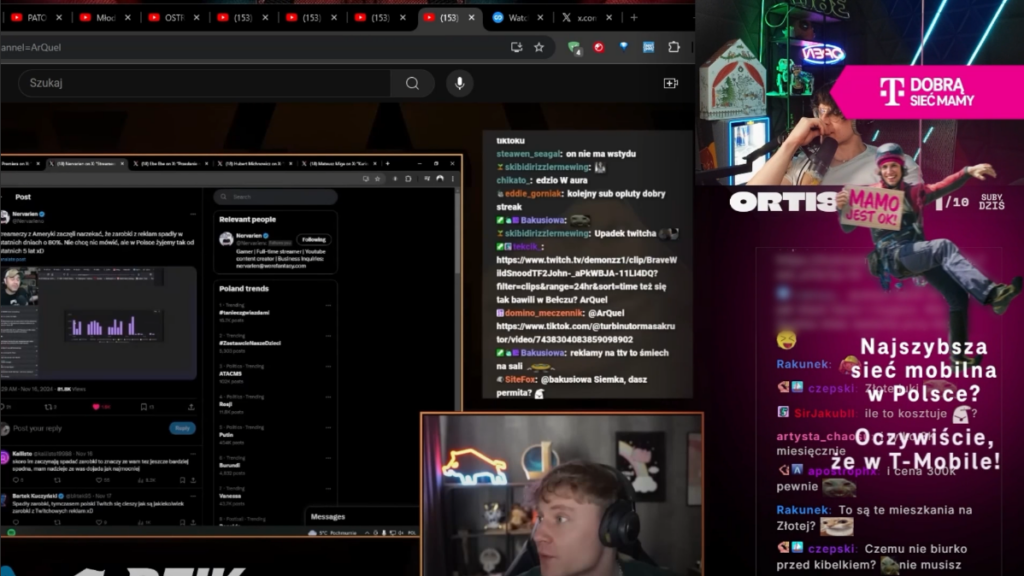
When T-Mobile used voice recognition to trigger on-screen animations whenever streamers naturally said “The Fastest Network”, the brand showed up only at relevant, creator-initiated moments – and it delivered +11 p.p. brand recall and +16 p.p. brand affinity. That’s earned attention in action.
Use Creators as Media, Not Just Faces
For Gen Z, the creator is the channel strategy. The most effective Gen Z marketing strategies treat creators as:
- co-authors of the idea,
- curators who know what will work for their community,
- distribution powerhouses across Twitch, YouTube, TikTok, Discord.
In Cheetos’ “Chepard Game” campaign, a virtual pet integrated with Twitch streams let viewers control the character via chat commands. The result: 220 streamers, 50,000+ unique interactions and 3.2M+ views – plus hard lifts in brand awareness and perception as a brand that supports streamers (+6 p.p. awareness, +11 p.p. “supports streamers”). The key was not just hiring creators, but building a format that belonged to their world.
Design for a Skippable World
Even if your ad can’t be technically skipped, it’s cognitively skippable. Design every piece of creative assuming the viewer might only give you a few seconds:
- Hook with value (emotion, insight, curiosity), not just branding.
- Make your message readable at a glance – overlays, banners, CTAs should be clear immediately.
- Assume sound-off and multitasking: visuals and text must carry the core idea.
In livestreams, this means your integration (overlay, animation, mechanic) needs to communicate in one glance what the brand is and why it’s there.
Principle 2 – Build With Communities, Not Just “Target Groups”
Gen Z doesn’t experience themselves as a demographic. They experience themselves as part of communities:
- a favourite game title,
- a streamer’s fandom,
- a Discord server,
- a niche interest (K-pop, car modding, speedrunning, fashion subcultures).
Your Gen Z marketing strategy needs to recognise that there’s no single Gen Z – only networks of overlapping micro-communities.
Think in Micro-Worlds, Not Broad Segments
Instead of “18-24, urban, high digital affinity”, ask:
- Which games do they play and watch?
- Which streamers do they follow?
- Which Discords are they in?
- What rituals do they have (tournaments, watch-parties, drops, raids)?
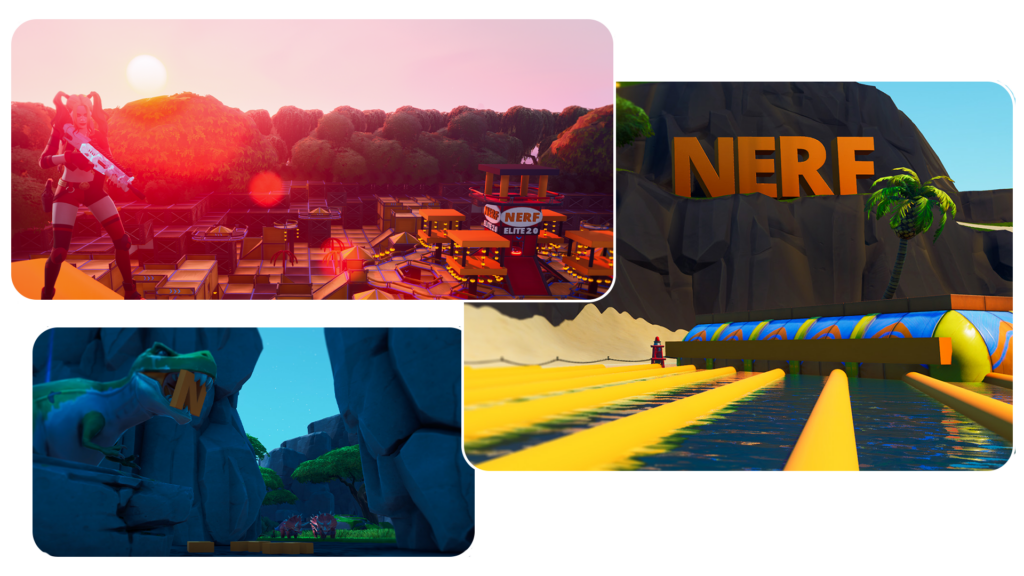
In the NERF City activation, the brand built six connected Fortnite maps plus a Discord hub, and amplified it via 1,000+ streamers. That micro-world generated 16,000 games played, 3M+ views and thousands of community members – a fully-fledged branded ecosystem, not a single ad flight.
Shift From Reach to Relationship Strength
You still need reach – but Gen Z marketing works best when you also plan for:
- frequency of meaningful contact (how often they see you in streams they care about),
- context (what was happening when your brand appeared),
- community response (chat, memes, UGC, server conversations).
That often means combining:
- a few high-reach creators (for cultural impact), with
- a long tail of mid-tier and micro streamers (for depth and trust).
Principle 3 – Authenticity and Values (Executed, Not Declared)
“Be authentic” is useless advice if it stays at slogan level. For Gen Z, authenticity is something you prove in how you show up. From the Live Streaming Trends 2025 research:
- 82.4% of streamers say brand-channel fit is crucial when deciding on collaborations.
- Streamers don’t report negative viewer reactions when sponsorships fit the channel and improve content quality.
Show Up Where Your Values Matter
This isn’t about sticking your logo on a random charity or esports event. It’s about asking:
- If we say we’re about connection, how can we literally connect people here?
- If we talk about energy, how do we bring emotional peaks into the stream?
- If we position ourselves as “the break”, what does that look like inside a game or stream?
Monte Snack did this by associating its product with “break moments” in gaming. Using AI voice recognition, branded animations appeared on Twitch whenever streamers said words like “pause” or “snack” – across 147 channels, generating 1.75M impressions and a 0.69% CTR, while reinforcing Monte as the snack for gaming breaks. The brand’s positioning wasn’t just said; it was acted out in real time.
Give Creators Room to Say “No” and Adapt
Creators are the guardians of their communities. If they feel forced into a message, both they and their audience will push back. Clear guardrails + creative freedom works better than rigid scripts. That’s why many successful inStreamly campaigns lean on:
- minimal mandatory phrases,
- flexible storylines,
- and formats that creators can naturally weave into their usual content.
Make Sponsorship Tangible for the Community
Instead of “proud sponsor of X”, think:
- in-game rewards,
- giveaways triggered by in-stream events,
- co-created experiences (maps, events, challenges) that feel like shared assets of the community.
This is where Gen Z feels your values: when your budget translates into something they can play with or benefit from, not just another logo.
Channels and Tactics That Actually Work for Gen Z in 2025
So what’s the best way to market to Gen Z in practice? Here’s where the framework meets channels.
Short-Form Video (TikTok, Reels, Shorts)
Role in the mix – top-of-funnel discovery and cultural participation.
What works:
- simple, repeatable formats rather than one-off “hero” ads,
- strong hooks tied to recognisable situations in Gen Z’s life,
- formats that creators and users can imitate, stitch, or remix.
You can also port highlights from streams (funny moments, campaign triggers, community reactions) into short-form, turning campaign mechanics into ongoing “social objects”.
Livestreaming and Gaming
Live streaming and gaming are now central to Gen Z’s media diet. 77% of stream viewers spend more than 5 hours weekly on streams, and 93% also actively play games. This is where inStreamly’s core play sits: contextual, tech-enabled formats that appear exactly when emotions peak, not in between.
Examples based on real campaigns:
- Gameplay Reaction – artwork appears when something specific happens in-game (losing a round, low HP, goal scored). Perfect for “heat happens”, “stay cool”, “you’ve earned it” type messaging.
- Voice Recognition – branded animations trigger when streamers say keywords (“break”, “hungry”, “fastest network”), turning brand lines into inside jokes across hundreds of streams.
- Brand Game – fully custom mini-game lived inside streams, where chat controls a branded character, as in Cheetos’ Chepard game.
These tactics make your brand part of the entertainment, not a break from it.
Social + Community Platforms (Discord, Servers, Fandom Spaces)
Think of Discord as:
- your always-on research panel,
- your loyalty layer,
- your hub for deeper experiences.
You can:
- extend stream activations into dedicated channels (challenges, drops, polls),
- run closed betas or testing panels for new products,
- build long-term communities around your brand’s “world”.
In the NERF City project, Discord was the HQ where players asked the brand hero questions, joined quests and qualified for IRL rewards like esports camps – bridging digital and physical engagement.
Hybrid Experiences (Events + Streams)
Gen Z often experiences events through creators rather than official feeds.
Ideas:
- let creators “host” your offline presence at festivals or fairs via co-streams,
- use live triggers (e.g. heart-rate-based activations, as gamescom did) to bring the emotional peaks of the event into everyday streams,
- mirror offline experiences (maps, installations, quests) inside games and streams.
The goal: one coherent story across formats, not isolated events.
A Step-by-Step Framework for Your Gen Z Marketing Plan
Let’s turn this into a checklist you can actually use.
1. Clarify Your Role in Gen Z’s World
Before picking channels, answer:
- Are we solving a functional problem (hunger, connectivity, pain relief, comfort)?
- Are we an experience enabler (events, games, entertainment, creativity)?
- Are we about identity & self-expression (fashion, beauty, devices)?
This will shape your messaging and the kind of format you design.
2. Map Attention Moments Along the Journey
Sketch Gen Z’s journey with your category:
- discovery moments (short-form, viral moments, creator shout-outs),
- evaluation moments (review streams, unboxings, “try with me” sessions),
- loyalty moments (recurring streams, Discord, events).
Mark where gaming and livestreaming are already natural:
- Do people talk about your category while gaming?
- Are there “break moments” you can own?
- Are there emotional highs you can tie to (goals, wins, fails)?
3. Choose the Right Mix of Creators and Channels
Plan a mix:
- Macro creators for cultural impact and hero content.
- Mid-tier creators for strong communities.
- Micro/long-tail streamers for credibility and scale.
In 2024 alone, inStreamly executed 361 campaigns for 132 brands in 15 countries – that experience shows you don’t have to choose between scale and authenticity; you can orchestrate both through tech and network effects.
4. Design for Interaction and Value Exchange
Pick mechanics that give viewers a role. For example:
- Voting features to let chat decide outcomes,
- Streamer’s Choice to let creators personalise your message,
- Product Feed to rotate multiple SKUs dynamically in overlays during a stream.
The key – viewers feel like they’re doing something with your brand, not watching it talk.
5. Measure What Actually Matters for Gen Z
Beyond impressions and CTR, focus on:
- Brand lift – recall, affinity, perception shifts (inStreamly’s network reports an average +14 p.p. brand affinity lift for contextual campaigns).
- Community sentiment – chat comments, Discord threads, memes.
- Behavioural signals – repeat participation, time spent with your branded mechanics, opt-in interactions.
This is what tells you whether your Gen Z marketing strategy is building equity, not just impressions.
Common Mistakes Brands Make With Gen Z (and How to Avoid Them)
Before looking at the most common mistakes, it’s worth acknowledging one thing – Gen Z doesn’t respond to traditional advertising rules. They navigate a world of content overload, high ad-blocking, and extremely selective attention-engaging only with brands that feel relevant, contextual and aligned with their digital habits. And since a large share of that attention flows into gaming and livestreaming environments , the gap between what brands think works and what actually resonates has never been bigger. This is where most missteps begin.
Mistake 1: Copy-Pasting Millennial Playbooks
Highly polished TV-style content, minimal creator freedom, and one big “hero video” don’t match how Gen Z consumes media.
Fix: design for interaction, not just viewing. Think series, formats and mechanics.
Mistake 2: Treating Gaming as a Niche
Gaming and “Just Chatting” dominate Twitch watch time; livestreaming is a multi-billion-dollar market expected to reach 15.32B USD in 2025. Treating it as a “side project” means ignoring where Gen Z actually spends hours every week.
Fix: put gaming and livestreaming into your core media plan, next to social and online video.
Mistake 3: Buying Reach, Not Relevance
Over-investing in one or two mega names and ignoring mid/micro creators leads to shallow presence and weak trust.
Fix: build layered creator mixes and long-tail streamer activations that reach Gen Z in their smaller, high-trust communities.
Mistake 4: Intrusive Formats That Break the Experience
Pre-rolls, mid-rolls and hard cutaways clash with how Gen Z uses adblockers and skips content.
Fix: use contextual, reactive formats (gameplay triggers, voice triggers, interactive overlays) that appear because something interesting is happening.
Mistake 5: One-Off Stunts
A single flashy activation won’t reposition your brand with Gen Z.
Fix: plan for continuity – recurring formats, seasonal updates, and cross-channel echoes (streams → short-form → Discord → events).
Where inStreamly Fits in a Gen Z Marketing Strategy
If you’re serious about Gen Z, livestreaming and gaming can’t be “experimental spend” anymore – they’re core. inStreamly is built exactly for that:
- a network of 150,000+ streamers,
- 950+ campaigns delivered with an average +14 p.p. brand affinity lift,
- technology that turns your message into non-intrusive, contextual moments: from Dynamic Copy and Gameplay Reactions to Voice Recognition and full Brand Games.
Campaigns for brands like Cheetos, T-Mobile, Monte Snack, Knorr, NERF and others show one thing consistently – when you respect Gen Z’s attention and culture, they reward you with real engagement and brand shifts – even in an adblocker world. Treat Gen Z not as “the future audience”, but as the current mainstream – and build strategies that meet them where they already are.
Sources
- inStreamly – Live Streaming Trends 2025 – Demographics, behaviours and attitudes of live-stream audiences